The Merchant Onboarding Playbook for Bank Offers Programmes
A card-linked offers programme lives or dies by its merchants. Here is a step-by-step playbook for recruiting, signing and activating merchants who stay.
Cardholders judge an offers programme by one thing: whether there is something worth using near them, today. That depends entirely on merchants. A beautiful app with thin, stale offers will struggle. A simple app with a lively, local merchant line-up will thrive.
This playbook covers how to bring merchants on board and, just as important, how to keep them.
Step 1: Decide who you want
Resist the temptation to sign everyone. Start with a clear picture of the merchants your cardholders value.
- Look at spend data. Which categories and neighbourhoods do your cardholders already spend in? Dining, cafés, groceries, fitness, beauty, fuel and family entertainment are common starting points.
- Mix anchors and locals. A few well-known brands give the programme credibility. Independent local businesses give it character and often offer more generous deals.
- Think in clusters. Ten merchants in one popular district create a better experience than ten merchants spread across the country.
- Include online merchants. E-commerce offers with coupon codes or tracked links extend the programme beyond physical locations.
Step 2: Make a pitch that fits the merchant
Merchants do not care about your loyalty strategy. They care about customers, revenue and effort. Lead with those.
What the merchant gets:
- Access to a large, verified audience of cardholders.
- Targeting, so offers reach people nearby who are likely to visit.
- Control over when offers run, so they can fill quiet hours rather than discount busy ones.
- Clear reporting on views, redemptions and returning customers.
- Little or no upfront cost, depending on the programme model.
What you ask of them:
- One clear offer to start.
- A few minutes to sign up and learn how redemption works.
- A commitment to honour offers consistently.
Keep the first conversation short. A one-page summary and a two-minute demo on a phone usually work better than a long presentation.
Step 3: Remove paperwork
Paper contracts are one of the biggest reasons merchant onboarding stalls. Forms get lost, signatories are travelling, and weeks pass.
Use a digital flow instead:
- The merchant receives an invitation link by email or SMS.
- They enter business details and upload any documents you need, such as a commercial registration.
- They review the agreement in Arabic or English and sign electronically, confirmed with a one-time password to their mobile.
- Your team reviews and approves the application.
What used to take weeks can take a day, and every step is recorded for audit.
Step 4: Help them create a strong first offer
The first offer sets the tone. Guide merchants towards offers that are simple, attractive and sustainable.
Good first offers usually:
- Are easy to understand in one sentence.
- Target quiet times or new customers, not busy periods.
- Offer something tangible: a free item, an upgrade or a clear discount.
- Have a sensible limit, for example once per cardholder per week.
Examples:
- "Complimentary dessert with any two main courses, Sunday to Wednesday."
- "20% off your first month's membership."
- "Free delivery on your first online order with code BANK20."
Offer templates by category can save merchants time and keep quality consistent.
Step 5: Make redemption effortless
If redemption is difficult for staff, offers will quietly stop being honoured. Give merchants options that fit how they operate.
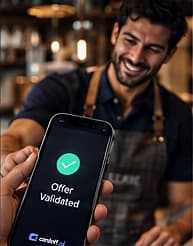
- Rotating customer code: the customer shows a short code in the app; staff enter it in a merchant validation app.
- QR or PIN tent card: the customer scans a card on the counter and confirms, ideal for busy counters.
- Coupon codes and tracked links: for online stores, with no staff action required.
None of these methods require the merchant to see or handle a card number, which keeps things simple and secure.
Step 6: Train the front line
The owner may understand the programme perfectly, but the person at the till on a Friday night is the one who matters. Provide:
- A short video or one-page guide in Arabic and English.
- A printed tent card or sticker that tells customers and staff the merchant is part of the programme.
- A support channel, such as live chat in the merchant app, for questions in the moment.
Step 7: Go live and follow up
The first two weeks are critical. Check that redemptions are happening, and call merchants who have none. Often the fix is simple: staff did not know about the programme, or the offer was not clear.
After the first month, share a simple performance summary with each merchant. Show them new customers, returning customers and their best-performing times. Merchants who see results stay; merchants who hear nothing drift away.
Step 8: Keep the network fresh
- Encourage merchants to update offers seasonally, for Ramadan, Eid, summer and school holidays.
- Add new merchants every month, and highlight them in the app.
- Retire offers that no one uses, and help merchants redesign them.
- Use a shared merchant network where possible, so merchants can extend offers to multiple banks' cardholders with one set-up.
Measuring onboarding success
- Time from invitation to signed agreement.
- Time from signature to first live offer.
- Share of merchants with at least one redemption in their first 30 days.
- Merchant renewal rate after the first offer period.
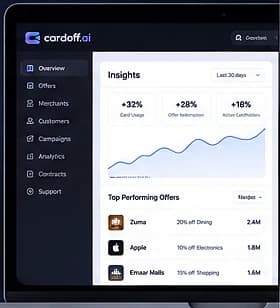
cardoff.ai includes the tools for every step of this playbook: e-signed merchant contracts with OTP, offer templates, a merchant validation app, built-in CRM and support tickets, and a shared merchant network across banks. If you are building your merchant line-up, we would be glad to help you get started.